Wingspan of 36-45 mm in males and 50-70 mm in females. Forewings are white with dark blue to black oval spots. Hindwings are white with small dark blue to black
spots. Thorax is furry white with 6 large blue-black spots. The abdomen is bluish-black to black with white bands.
Larvae
Younger larvae are yellow becoming yellowish-pinkish when mature. Mature larvae reach 50-60 mm in length. A number of black points are on each segment and the
head and prothoracic plate are shiny black
Eggs
Initially light yellow becoming pinkish with age and ca. 1 mm in length. Laid singly or in small clusters in cracks and crevices of trees.
Distribution
Europe the Middle East, eastern Asia, North Africa and North America.
Economic Host(s)
Apple (Malus) pear (Pyrus) and occasionally olive (Oleae).
Symptons/Signs
Young larvae enter shoots near the tip and move into older wood to feed once the shoot dies. Dead shoots appear and apical regions of branches begin to dicolour.
Frass that resembles sawdust is visible near entrance holes.
Generations
1
Monitoring
Adults Present
June to August(climate dependant)
Recommended Trap Density
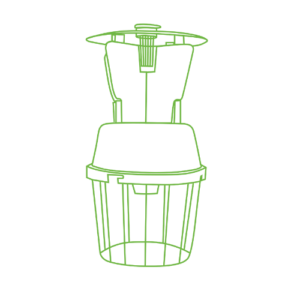
2-3 traps per hectare in large uniform orchards and 3-5 traps per hectare in less dense or mixed orchards and groves.
Trap Maintenance
Check traps on a regular basis; at least twice a week. Replace the pheromone dispensers every 4 weeks to achieve optimum results
Storage
Keep product away from heat and direct sunlight. Store in a refrigerator for a shelf life of 12 months or a freezer for an extended life of 18 months. Always store sealed in
original packaging.